
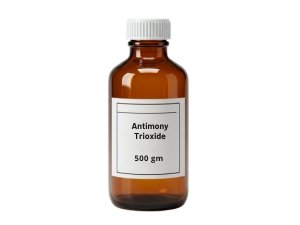
Antimony Trioxide 98%
₹0.00 – ₹7,000.00
Antimony Trioxide is a white, inorganic compound used as a flame retardant, opacifier in glass and ceramics, and a catalyst in the production of PET plastics. It presents potential health hazards, particularly through inhalation.
Antimony trioxide is an inorganic compound with diverse industrial applications, primarily due to its flame-retardant properties. Here's a more detailed description:
Chemical and Physical Properties:
- Chemical Formula: Sb₂O₃
- Appearance: White crystalline solid or powder.
- Physical State: Solid at room temperature.
- Melting Point: 656 °C
- Boiling Point: 1550 °C (sublimes)
- Density: 5.2 g/cm³
- Solubility: Insoluble in water, but soluble in concentrated hydrochloric acid and hot tartaric acid.
- Stability: Relatively stable under normal conditions.
Applications:
- Flame Retardant:
- The most significant application of antimony trioxide is as a flame retardant. It is commonly used in combination with halogenated flame retardants, particularly in plastics, textiles, and rubbers.
- Opacifier:
- It serves as an opacifier in the production of glass, ceramics, and enamels, giving them a white, opaque appearance.
- Catalyst:
- It is used as a catalyst in the production of polyethylene terephthalate (PET) plastics.
- Pigments:
- It has been used as a pigment in paints and other coatings.
- Other Applications:
- It is used in various other industrial processes, including the production of certain chemicals.
Safety Considerations:
- Toxicity:
- Antimony trioxide can be toxic, particularly through inhalation of dust or fumes.
- Long term exposure can cause respiratory problems, and other health issues.
- Potential Carcinogen:
- There are concerns about its potential carcinogenic properties.
- IARC has classified antimony trioxide as a Group 2B carcinogen, meaning it is possibly carcinogenic to humans.
- Environmental Concerns:
- Antimony can accumulate in the environment, posing potential risks.
- Handling Precautions:
- Appropriate personal protective equipment (PPE), including respiratory protection, gloves, and eye protection, is essential.
- It should be handled in well-ventilated areas.
Key Characteristics:
- Its flame-retardant properties make it a crucial industrial chemical.
- Its opacifying properties are also significant.
- The potential health hazards require careful handling.
In summary, antimony trioxide is a valuable industrial compound with diverse applications, but its toxicity and potential carcinogenicity necessitate strict safety measures.
Additional information
| Weight | N/A |
|---|---|
| CAS number | 1309-64-4 |
| Chemical formula | Sb₂O₃ |
| Molar mass | 291.52 g/mol |
| Physical state | White crystalline solid or powder. |
| Odor | Odorless |
| Melting point | 656 °C |
| Boiling point | 1550 °C |
| Density | 5.2 g/cm³ |
| Solubility in water | Insoluble |
| Flash point: | Non-flammable. |
| Autoignition temperature | NA |
| Dye Content | NA |
| Vapor pressure | Low |
| UN number | UN 1549 |
| Flammability | Non-flammable |
| Carcinogenicity | IARC has classified antimony trioxide as a Group 2B carcinogen, meaning it is possibly carcinogenic to humans. |
| Grade | CP |
| Size | 500 gm, 5 kg, 25 kg |
Only logged in customers who have purchased this product may leave a review.

Products
-
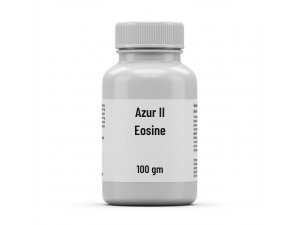 Azur II Eosin
₹0.00 – ₹1,100.00
Azur II Eosin
₹0.00 – ₹1,100.00
-
 Azure II
₹0.00 – ₹1,290.00
Azure II
₹0.00 – ₹1,290.00
-
 Azur B
₹0.00 – ₹925.00
Azur B
₹0.00 – ₹925.00
Reviews
There are no reviews yet.